
Currently Empty: ₹0.00
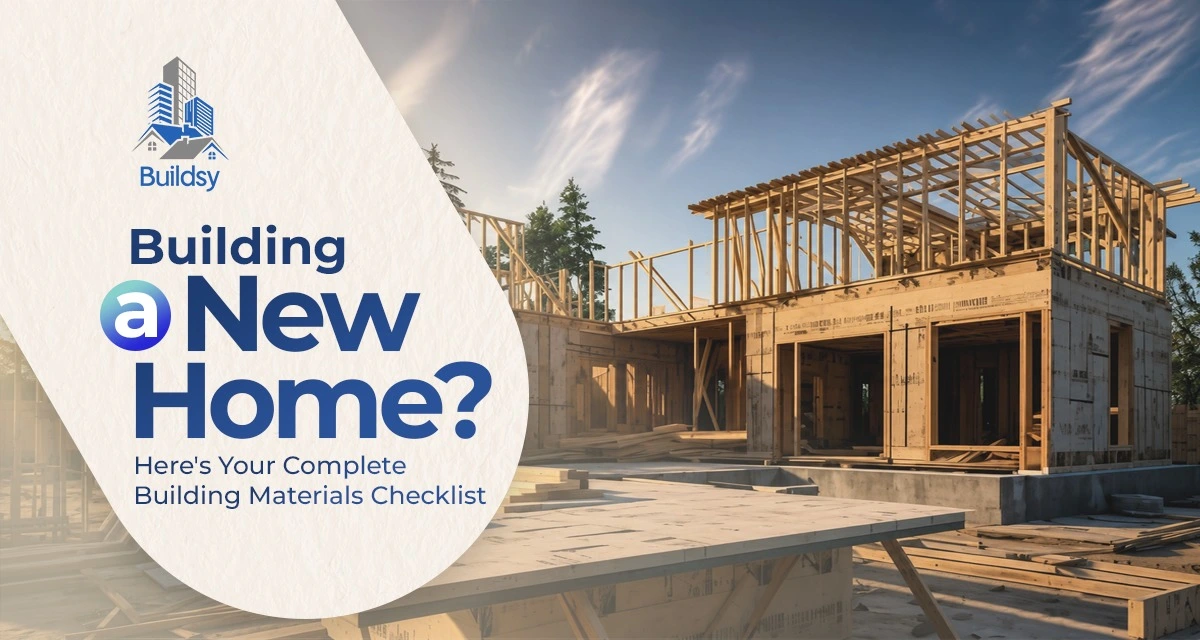
Building a New Home? Here's Your Complete Building Materials Checklist
Building a new home is one of the most significant things a person can do and for most families in India, it’s a once-in-a-lifetime project. The excitement is real — choosing layouts, imagining rooms, planning every corner — but so is the confusion. One of the things that catches people off guard most often is just how many decisions need to be made before a single wall goes up and how quickly costs spiral when you’re unprepared.
A well-thought-out building materials checklist can save you from that chaos. It helps you plan purchases in phases, avoid last-minute scrambling and make sure nothing important gets missed or compromised on quality.
Quick Answer: The building materials for a new home fall broadly into two categories — structural materials (cement, sand, bricks, steel, aggregates) that form the skeleton of the house and finishing materials (tiles, pipes, sanitaryware, bathware, panels and fittings) that define how it looks and functions day to day. Both categories require careful planning but finishing materials are where most homeowners make expensive, hard-to-undo mistakes by choosing on impulse or buying piecemeal without a clear plan.
But worry not as this checklist walks you through both — phase by phase.
Phase 1: Structural and Foundation Materials
This is the groundwork — literally. Before anything else, your contractor and structural engineer will guide requirements based on your plot size, soil type and design. But as a homeowner, knowing what’s involved helps you ask the right questions and not be caught off guard.
The key materials in this phase include:
- Cement — Grade depends on the construction type; OPC 53 Grade is commonly used for RCC structures
- Sand — River sand for masonry and concrete mixing; M-sand is now widely used as an alternative
- Aggregates (Gitti/Gravel) — Used in concrete for floors, beams and columns
- Steel/TMT Bars — For reinforcement in columns, slabs and beams; quality here directly affects structural safety
- Bricks or AAC Blocks — For wall construction; AAC blocks have gained preference for being lighter and better insulating
- Waterproofing compounds — Essential in foundations, terraces and wet areas
Your civil contractor typically handles procurement in this phase but it’s worth knowing what’s going into your home.
Phase 2: Plumbing and Water Systems
Plumbing is one of those things people don’t think much about while building — until there’s a leak, a blockage or low water pressure six months after moving in. Getting the right pipes and fittings installed from the start avoids all of that.
For a new home, the plumbing material requirement covers:
- CPVC or PPR pipes for hot and cold water supply lines inside the house — these handle temperature variation far better than standard PVC
- UPVC pipes for cold water lines and general water supply
- SWR pipes (Soil, Waste, Rainwater) for drainage and waste management
- PVC fittings — elbows, tees, reducers, couplings and connectors throughout
- Valves and stop cocks for each bathroom and the kitchen
- Underground drainage pipes for external drainage connections
Don’t cut corners here. Leaking pipes inside finished walls are an expensive problem to fix. Using good quality branded pipes from a reliable source matters more in plumbing than in almost any other material category. The post on best PVC pipe suppliers in Dehradun for quality and price has some useful guidance on what to look for if you’re sourcing locally.
Phase 3: Flooring and Wall Tiles
This is where the building materials checklist starts overlapping with interior design and honestly this is where most of the visible character of your home comes from. Tiles are permanent decisions — once laid, they’re not easy or cheap to change — so it’s worth getting them right the first time.
Room-by-room, here’s what you typically need to plan for:
- Living and dining room — Large format floor tiles (600×1200 mm) in matte or polished finish are popular for a contemporary look
- Bedrooms — Warmer tones, wooden-look tiles or subtle stone textures work well for a restful feel
- Kitchen floor and dado tiles — Need to be practical: anti-skid, easy to clean and resistant to staining
- Bathroom floor tiles — Anti-skid finish is non-negotiable; wall tiles can be more decorative here
- Staircase tiles — Anti-skid, hard-wearing and usually coordinated with the living area
- Parking and outdoor tiles — Heavy-duty, weather-resistant and specifically rated for outdoor use
- Elevation tiles — For exterior wall cladding and the front face of the home; this is often overlooked until the end but makes a big first impression
When estimating quantities, always add 10–15% extra to account for breakage, cuts and any replacements needed later. If you want to understand what’s trending in tile finishes and formats before finalising your choices, the post on top tile design trends in 2026 for modern homes is worth a look.
Phase 4: Sanitaryware and Bathware
Once the structure is up and tiles are planned, the bathroom fittings need to be finalised — ideally before tiling begins, since fitting locations determine where pipes and drainage points go. Changing these after tiling is messy and expensive.
Sanitaryware covers:
- Water closets (WCs) — wall-hung, floor-mounted one-piece or two-piece; the choice affects both aesthetics and wall plumbing requirements
- Wash basins — counter-top, table-top, wall-hung, half-pedestal or floor-mounted depending on the bathroom size and style
- Cisterns and flush systems
Bathware covers:
- Faucets and mixers for basins, showers and the kitchen sink
- Overhead showers, hand showers and shower panels
- Towel rails, towel rings, robe hooks, soap dishes and other accessories
- Health faucets and jet spray units
- Floor drains and waste couplings
For anyone going into this selection without a clear plan, the post on how to choose the right bathware for your bathroom interior breaks down the decision process in a very practical way.
Phase 5: Interior Wall Panels and Cladding
This is a category that not every homeowner includes in their initial checklist but it’s increasingly common in modern builds. Wall panels can replace traditional paint or tile on feature walls, bedroom walls, TV units and ceilings — and they come in a wide range of materials.
Common options include:
- WPC panels — Durable, moisture-resistant and great for bathrooms and kitchens
- PVC panels — Lightweight and easy to install, available in many finishes
- MDF panels — Popular for interior accent walls and furniture fronts
- Gypsum panels — Commonly used for ceilings and partitions
- ACP (Aluminium Composite Panels) — Mostly used for exterior cladding and elevation features
- 3D wall panels — For accent walls in living rooms or bedrooms
Planning this category before finishing begins avoids the situation where walls are already painted and you’re trying to retrofit panels awkwardly.
A Note on Sourcing
Having a good building material supplier relationship matters a lot during construction. Availability, consistency in stock and the ability to get replacements quickly if something breaks in transit or during installation — these things affect your construction timeline significantly. Buying most of your finishing materials from one supplier makes the project easier to manage and can save you money through better discounts.
Conclusion
Building a new home is a long process but a solid building materials checklist brings order to it. So start with structure, plan your plumbing early, finalise tiles before walls are plastered, choose sanitaryware and bathware before tiling the bathrooms and don’t leave wall panels and cladding as an afterthought. Remember the decisions you make on finishing materials are the ones you’ll live with every day — so they deserve as much thought as the structural ones.
For homeowners in Uttarakhand and Dehradun looking for a single, reliable building material supplier for finishing needs, Buildsy is one of the most comprehensive options available locally. Stocked across tiles, sanitaryware, bathware, pipes and wall panels, Buildsy covers most of the finishing checklist items under one roof — from floor tiles and elevation cladding to faucets, wash basins, showers, PVC pipe fittings and interior wall panels in a wide variety of materials and finishes. The product range is sourced from trusted manufacturers and the team at Buildsy’s Dehradun store is equipped to guide you on quantities, specifications and material choices specific to your build. Whether you’re in the early planning stage or getting into the finishing stretch of your new home, visiting the Buildsy store or reaching out to the team at +91 9663658377 is a practical step toward getting your materials right the first time.